Azure Blanc · The Story of Porcelain
Blanc de Chine:
The White of Dehua
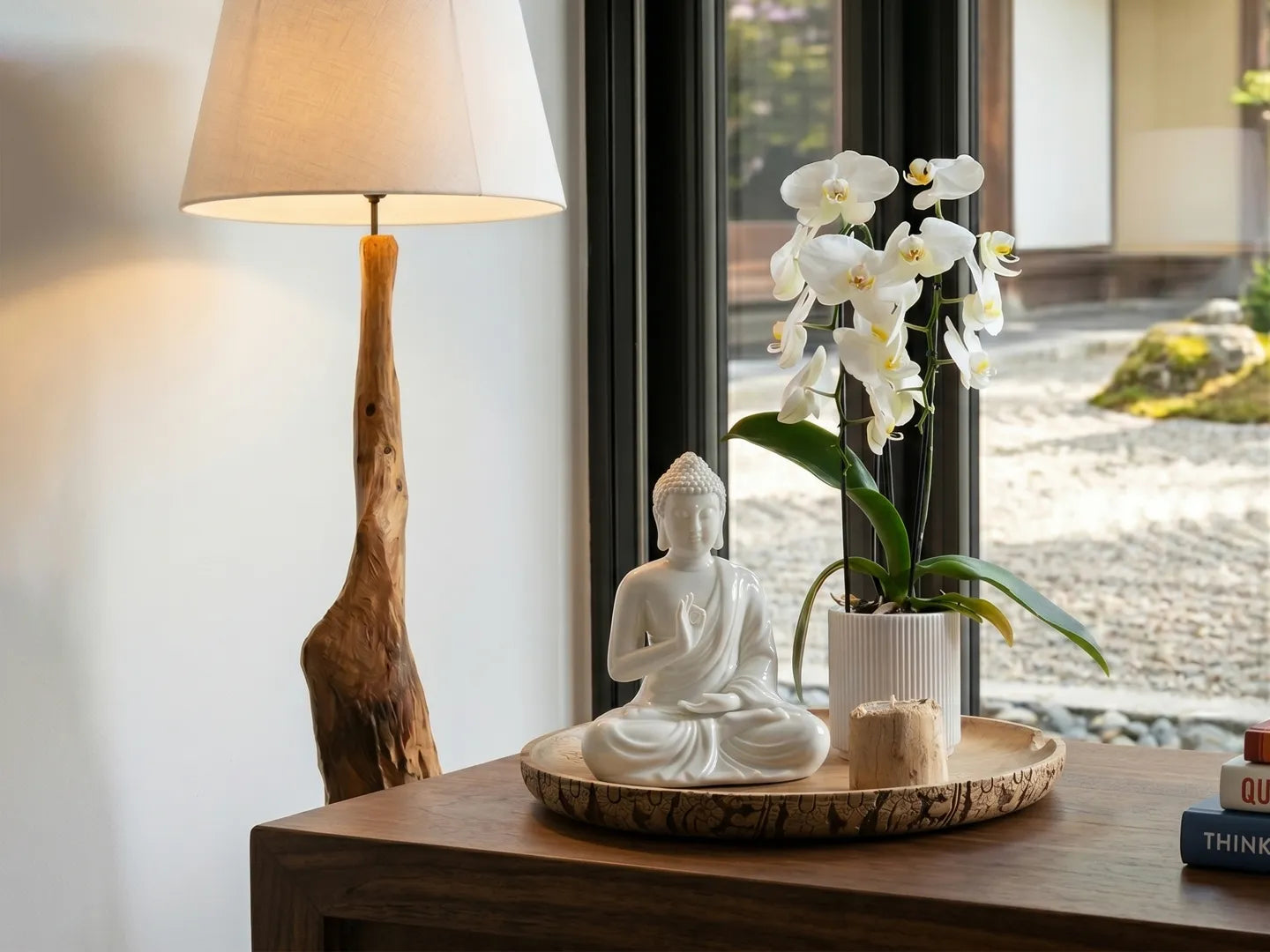
Clay. Fire. And China White. That’s what they called it. The creamy ivory porcelain that captivated European royalty.
People often think Jingdezhen blue and white was the first Chinese porcelain to reach Europe. That’s not true. Dehua got there first, hundreds of years earlier, carried by ships along the old maritime trade routes.
Marco Polo wrote about it in his travels. He said it was “white and fine”. He brought a piece home with him. It was the first Chinese porcelain most Europeans ever saw.
Section I
The White of China
They’d never seen anything like it. They couldn’t copy it. So they named it. Blanc de Chine. “The White of China.” And the name stuck. It still does, today.
By the 17th and 18th centuries, it was everywhere. Kings and queens collected it. Nobles displayed it in their homes as a sign of wealth and taste. European potters tried to replicate it, again and again. None of them succeeded.
The Heritage
The Golden Age
The Ming Dynasty was the golden age for Dehua. That’s when He Chaozong worked. They called him the “Saint of Porcelain”. His Guanyin statues are famous for their calm expressions and flowing robes. Today, his pieces sell for millions at auction, in museums all over the world.
Section II
What Makes It Special
In China, they say: “The world’s white porcelain comes from China. And China’s best comes from Dehua.”
The Clay
Warm Ivory Light.
The reason is simple: the clay. Dehua’s kaolin is unique. Less than 0.5% iron oxide. It makes porcelain that’s “white as snow, bright as a mirror, smooth as jade, translucent as silk”. Hold it to the sun, and it glows with a warm ivory light. No other place can make that.
The Restraint
The Material Speaks.
The beauty of Dehua porcelain is in its restraint. It doesn’t shout with bright colors or busy patterns. It lets the material speak for itself. When there is decoration, it’s subtle: a gentle line, a small flower, a soft curve. Nothing overdone. The focus is always on the form, the texture, the light.


Section III
The Craft & The Kilns
Every piece is made by hand, through dozens of steps. The finest work is less than a millimeter thick. Hold it up to a lamp, and it’s almost see-through. They say, “From far away, it looks like silk. Up close, it’s porcelain.” It takes steady hands and years of practice. One mistake, and the piece is broken, and you start over.
Many kilns in Dehua still use the old dragon kilns. Built into the mountains, they rely on natural draft to fire the porcelain. The heat is uneven, the process unpredictable, but it gives the glaze a warmth and depth that modern electric kilns can’t match.

Section IV
A Global Legacy
In 2021, the Dehua kilns were listed as a UNESCO World Heritage Site. The craft is also protected as one of China’s first National Intangible Cultural Heritages.
Even today, Dehua porcelain is given as a gift to world leaders. It’s a way to share Chinese culture with the world.
Watch
Discover Blanc de Chine


The Journal
From The Journal
Stories of craft, culture, and the quiet beauty of things made by hand.
Read More StoriesAnd it fits perfectly in modern homes. It’s quiet. Calm. It doesn’t demand attention, but it makes any space feel more peaceful.